

Foreclosure Help Center

Understanding Your Options
If you're facing foreclosure, you're not alone—and you may have more options than you realize.
Receiving a Notice of Default, falling behind on mortgage payments, or learning that your home is scheduled for auction can be overwhelming. Many homeowners mistakenly believe foreclosure is inevitable once the process begins. In reality, there are often several options available to help you keep your home, protect your equity, or sell your property before foreclosure is completed.
The purpose of the Default Remedy Foreclosure Help Center is to provide clear, easy-to-understand information so you can make informed decisions about your future.
What Is Foreclosure
Foreclosure is the legal process a lender uses to recover the balance of a mortgage loan when a homeowner falls behind on payments. The lender may ultimately sell the property at a foreclosure auction to satisfy the debt.
The foreclosure process does not happen overnight. Homeowners typically have multiple opportunities to explore solutions before the property is sold at auction.
Common Signs You May Be Entering Foreclosure
You may be at risk of foreclosure if:
- You have missed one or more mortgage payments
- You have received collection notices from your lender
- You received a Notice of Default (NOD)
- You received a Notice of Trustee Sale (Auction Notice)
- Your lender has denied a previous loan modification request
- You are struggling to catch up on missed payments
The sooner you take action, the more options you may have available.
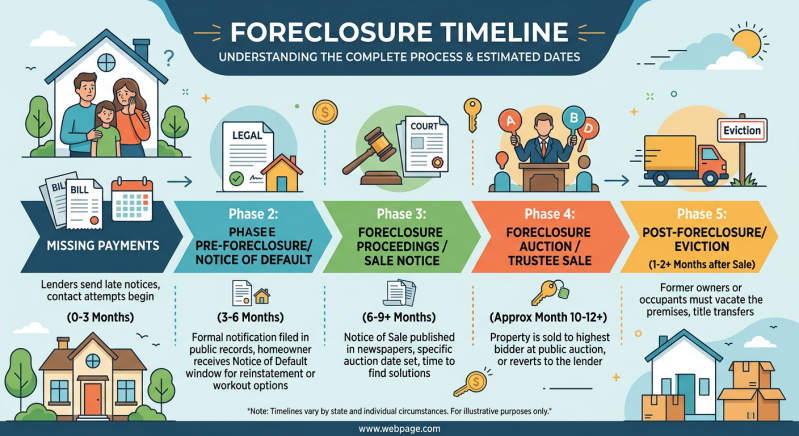
Understanding the foreclosure timeline can help you make informed decisions and avoid waiting until your options become limited. While every situation is unique, most foreclosures follow a series of important milestones that homeowners should understand.
Key Foreclosure Milestones
1. Missed Mortgage Payments
The foreclosure process typically begins when a homeowner falls behind on mortgage payments. Most lenders will attempt to contact the homeowner and offer opportunities to bring the loan current before taking further action.
2. Notice of Default (NOD)
A Notice of Default is a formal notice that the homeowner is behind on payments and that foreclosure proceedings have begun. This is often the first major warning sign and a critical time to explore solutions such as loan modification, repayment plans, or selling the property.
3. Notice of Trustee Sale
If the loan is not brought current, the lender may record a Notice of Trustee Sale. This document announces the date, time, and location of the foreclosure auction. Once this notice is issued, time becomes extremely important.
4. Foreclosure Auction
The foreclosure auction is the public sale of the property. If the home is sold at auction, ownership may transfer to a new buyer or the lender. After this point, options for the homeowner become much more limited.
Important Deadlines
Foreclosure is a time-sensitive process. Waiting too long can eliminate valuable options that may have been available earlier. Key deadlines often involve:
-
Responding to lender notices
-
Submitting loan modification applications
-
Bringing the loan current
-
Listing and selling the property before auction
-
Negotiating alternative solutions with the lender
The earlier a homeowner takes action, the more opportunities they typically have.
When Are Foreclosure Auctions Scheduled?
A foreclosure auction is usually scheduled after the lender has completed the required foreclosure notices and waiting periods. The auction date is typically listed on the Notice of Trustee Sale.
Once an auction date has been scheduled, homeowners should act immediately to explore available options. Depending on the circumstances, solutions may still exist before the sale occurs.
How Much Time Do You Have to Act?
The amount of time varies depending on your state, lender, and foreclosure status. Homeowners generally have the most options during the early stages of delinquency and after receiving a Notice of Default.
If you have already received a Notice of Trustee Sale or have an upcoming auction date, immediate action is critical. Waiting until the final days before an auction can significantly reduce available solutions.
Don't Wait Until It's Too Late
If you are behind on payments, have received a Notice of Default, or have an auction date approaching, request a Free Foreclosure Options Review today. Understanding your timeline is the first step toward protecting your home, your equity, and your financial future.